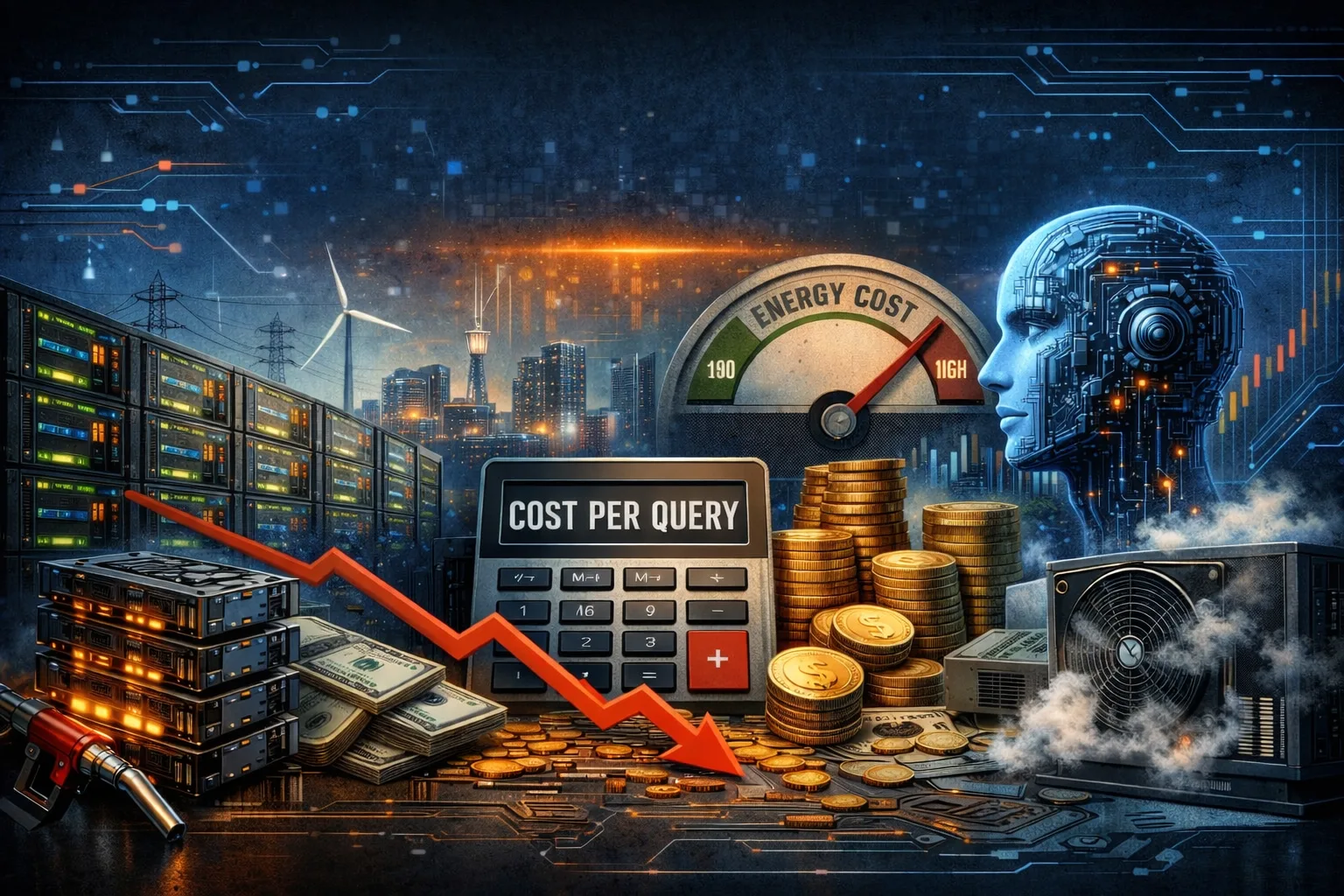
Hedder recently described AI’s coming “oil shock moment.”
It’s a great framing. But it misses something important.
This isn’t just about scarcity. It’s about discipline.
Canada’s biggest AI challenge isn’t building smarter models. It’s deploying intelligence affordably at scale. Data sovereignty and domestic capability matter, but without cost discipline they become a tax on innovation. Canada’s real advantages, clean energy, natural cooling, and strong public sector demand, only pay off with a cost-first AI strategy that prioritizes efficient deployment over raw capability.
For the past two years, we’ve optimized for:
- Bigger models
- Better benchmarks
- More capability
But at scale, none of that matters if you can’t afford to use it.
The real constraint isn’t intelligence. It’s the cost of deploying it.
Canada is asking the right questions:
- Data sovereignty
- Domestic AI capability
- Trust and governance
But here’s the uncomfortable truth: sovereignty without cost discipline becomes a tax on innovation.
Today, most scalable AI runs through:
- Amazon Web Services
- Microsoft Azure
- Google Cloud
They don’t just win on scale. They win on efficiency.
Meanwhile, there’s a signal we’re not paying enough attention to.
China has taken a different approach:
- Smaller, optimized models
- Cost-first infrastructure
- Relentless focus on cost per inference
Not better models. More efficient intelligence.
Here’s the shift: the future of AI won’t be defined by how smart models are, but by how cheaply you can deploy intelligence at scale.
This is actually good news for Canada. We don’t need to outspend the U.S.
We can win a different game:
- Smarter architectures
- Hybrid sovereignty (sensitive data in Canada, the rest global)
- Aggressive cost optimization
- “Good enough” intelligence over perfect
Because the next winners won’t be the companies with the best models. They’ll be the ones who can answer: what is your cost per useful outcome?
Canada has real advantages:
- Clean, stable energy
- Natural cooling
- Strong public sector demand
But advantages don’t matter without strategy.
AI is no longer just a software problem. It’s a cost system. And if Canada gets that right early, we don’t just participate in the AI economy. We define a smarter version of it.
Frequently Asked Questions
What is Canada’s biggest AI challenge?
Canada’s biggest AI challenge isn’t building smarter models or catching up to U.S. research labs. It’s the cost of deploying AI at scale. Without cost discipline, investments in data sovereignty and domestic AI capability become expensive liabilities rather than competitive advantages.
Why does AI cost matter more than AI capability?
Bigger, more capable models are meaningless if organizations can’t afford to run them in production. The future of AI will be defined not by how smart models are, but by how cheaply you can deploy useful intelligence at scale. Cost per useful outcome is becoming the metric that separates winners from everyone else.
How is China approaching AI differently?
China has prioritized smaller, optimized models, cost-first infrastructure, and relentless focus on cost per inference. Rather than chasing the biggest models, China is building more efficient intelligence — an approach that focuses on practical deployment economics over benchmark performance.
What is hybrid AI sovereignty?
Hybrid sovereignty is a pragmatic approach where sensitive data stays within Canadian borders while non-sensitive workloads run on global infrastructure. It balances the need for data sovereignty and regulatory compliance with the cost efficiency and scale of hyperscale cloud providers like AWS, Azure, and Google Cloud.
What natural advantages does Canada have for AI infrastructure?
Canada has three structural advantages for AI infrastructure: clean and stable energy (critical for power-hungry data centres), cold climate that provides natural cooling (reducing operational costs), and strong public sector demand that creates a reliable domestic market. But these advantages only matter with a deliberate cost-first AI strategy.
What does “cost per useful outcome” mean for AI?
Cost per useful outcome measures how much it costs to get a valuable result from an AI system — not just the cost of running a model, but the total cost of producing something a business or user actually needs. It shifts the focus from model performance benchmarks to real-world deployment economics, which is where AI’s value is ultimately realized.
