
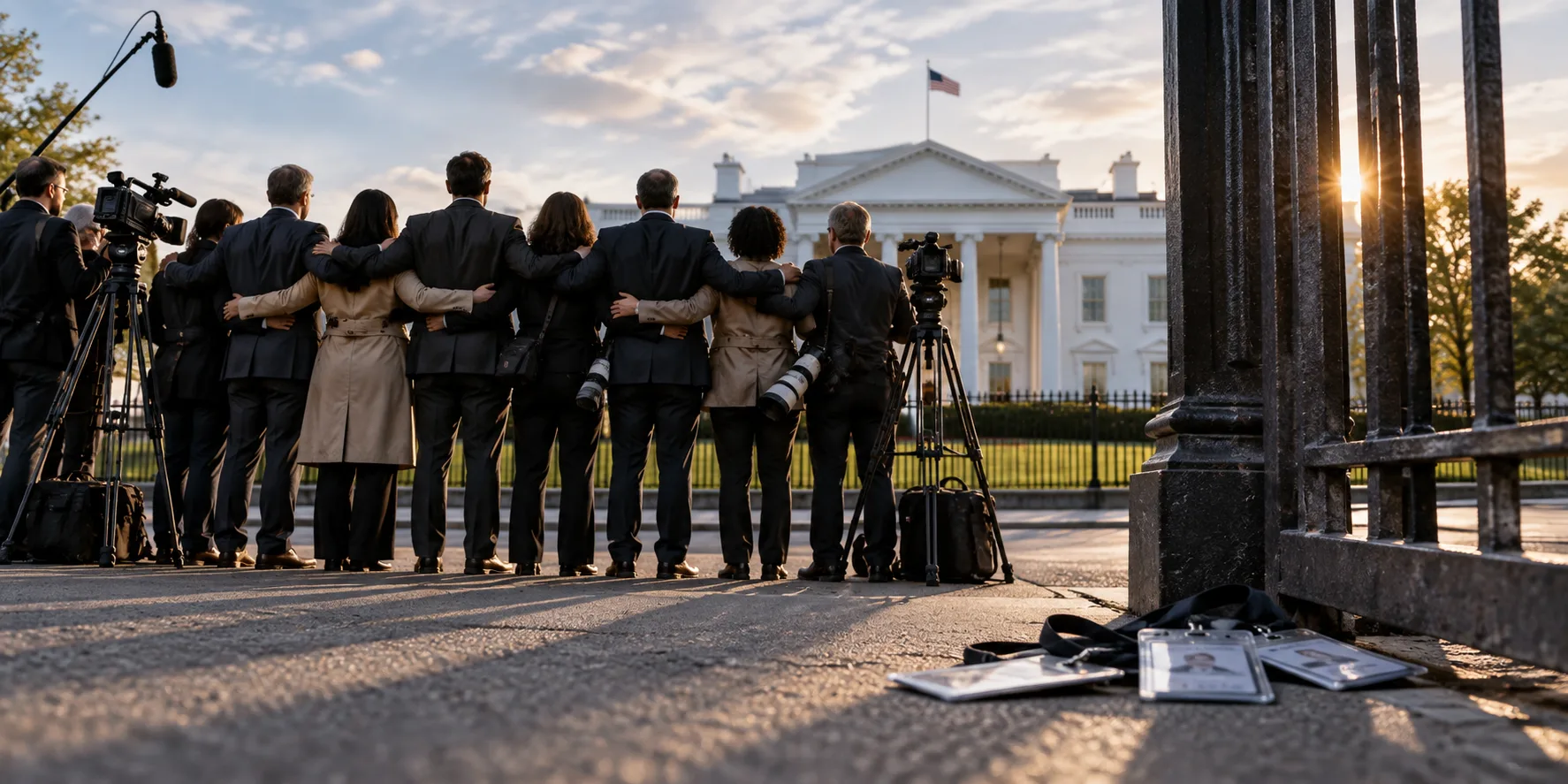
Trump has banned CNN, MS NOW and Politico from the White House, and on September 19 reporters from all three were turned away at the gate. The press used to answer this differently. In 2009, when the Obama administration tried to leave Fox News out of a pay czar interview, the other network bureau chiefs refused to do the interview without Fox, and the administration relented. In 2017, AP and Time declined a briefing their competitors were barred from. In 2025, dozens of reporters from the New York Times to Fox to Newsmax handed in their Pentagon badges rather than accept new restrictions. The logic is not ideological, it is practical: if excluding one outlet means nobody shows up, exclusion gets expensive. Condemnation is cheaper, and it costs the government nothing.
There was a time when kicking a news organization out of the room risked emptying the room.
Not because journalists agreed with each other. They understood something more important: if the government gets to decide which legitimate journalists are allowed in based on whether it likes their coverage, eventually everyone is vulnerable.
This week, President Donald Trump banned CNN, MS NOW and Politico from the White House, accusing them of producing “fake news.” On September 19, reporters from all three tried to enter and were turned away.
There have been condemnations. But history suggests the press once had a better response than that.
When Obama’s White House went after Fox
In 2009, the Obama administration was publicly fighting with Fox News and questioning whether it should even be treated as a legitimate news organization.
During a dispute over interviews with executive-pay official Kenneth Feinberg, Fox wasn’t initially included.
The Washington bureau chiefs of ABC, CBS, CNN, Fox and NBC talked to each other. Contemporary accounts reported that the networks insisted Fox be included.
The administration backed down.
There is some dispute over whether Fox was deliberately excluded or simply hadn’t asked for the interview yet. But that’s not really the point. The point is what the other networks did next.
CNN defended Fox. NBC defended Fox. CBS defended Fox.
They weren’t defending Fox’s politics. They were defending the idea that the government doesn’t get to decide who belongs in journalism.
Then Trump tried it
In February 2017, Trump’s White House held an informal press briefing and excluded reporters from the New York Times, CNN, Los Angeles Times, Politico and BuzzFeed.
The Associated Press could have attended.
Time also declined to participate.
They gave up privileged access rather than benefit from their competitors being shut out.
The solidarity wasn’t universal, but the principle held:
Today’s excluded competitor could be tomorrow’s excluded newsroom.
Then something changed
The turning point may have come in 2025.
The Trump administration restricted Associated Press access after the AP kept using “Gulf of Mexico” while acknowledging Trump’s preferred “Gulf of America.”
The AP sued and initially won in federal district court.
Other news organizations protested. But the White House press corps kept covering the White House anyway.
There was no equivalent of 2009. No “no AP, no pool.”
Around the same time, the White House took control over which organizations participated in the rotating press pool, a system journalists had traditionally organized themselves through the White House Correspondents’ Association.
“In a free country, leaders must not be able to choose their own press corps.”
We know collective action still works
Later in 2025, the Pentagon introduced restrictive new rules governing journalists’ access.
This time the press actually acted together.
The New York Times, Washington Post, CNN, Fox News, ABC, CBS, NBC, Reuters, AP, Politico, The Atlantic, Newsmax and many others rejected the rules.
Dozens of reporters turned in their badges and walked out rather than accept the conditions.
That proved something. The government can exclude one journalist relatively easily. Excluding almost everyone is a lot harder.
Which brings us back to today
CNN, MS NOW and Politico are now outside the White House gates.
Whether you like those organizations shouldn’t matter.
In 2009, CNN didn’t need to agree with Fox to defend its access.
In 2017, AP didn’t need to agree with CNN or the New York Times to turn down preferential treatment when they were excluded.
In 2025, Fox and Newsmax didn’t have to become ideological allies of the New York Times to stand with it against Pentagon restrictions.
There’s a practical reason this solidarity matters. If excluding CNN gives Fox a better seat, excluding CNN has value. If excluding Fox gives CNN the interview, excluding Fox has value. If excluding either means nobody shows up, exclusion suddenly gets expensive.
That was the power of the old norm. Competing news organizations could, when it mattered, act like a single institution.
A president could criticize them. Refuse their questions. Attack their reporting. But going after one risked confronting all of them.
The question for the journalists still inside the White House isn’t whether they agree with the organizations outside.
It’s whether they still believe what their predecessors proved when Obama’s White House went after Fox: you don’t defend the reporter beside you because you agree with them. You defend their place in the room because someday the empty chair might be yours.
Frequently Asked Questions
What happened to CNN, MS NOW and Politico?
Trump announced on Truth Social that he was banning the three organizations from the White House, effective immediately, over what he called their constant reporting of fake news. The following day, September 19, reporters from all three were turned away at the security booth. A CNN photographer said their passes were confiscated on the way out.
What did the networks do when Obama’s White House went after Fox?
In October 2009, Treasury tried to make pay czar Kenneth Feinberg available to the network pool without Fox News. The Washington bureau chiefs of ABC, CBS, CNN, Fox and NBC consulted each other and decided none of their reporters would do the interview unless Fox was included. The administration relented and Fox interviewed Feinberg on camera. Treasury later called the whole thing a miscommunication, and there is genuine dispute about whether the exclusion was deliberate, but what the other networks did is the part that matters.
Did anyone boycott the 2017 White House gaggle?
Yes. When the White House barred the New York Times, CNN, Los Angeles Times, Politico and BuzzFeed from an informal briefing in February 2017, the Associated Press and Time were both eligible to attend and both declined. They gave up privileged access rather than benefit from competitors being shut out. The solidarity wasn’t universal, but the principle held.
What happened with the AP and the Gulf of Mexico?
The White House restricted AP access to the Oval Office and Air Force One after the wire service kept using Gulf of Mexico while noting Trump’s preferred Gulf of America. The AP sued and won a preliminary injunction in federal district court, where the judge wrote that a government which opens its doors to some journalists cannot shut them to others over viewpoint. Other outlets protested, but nobody stopped covering the White House.
Who controls the White House press pool now?
The White House does. In February 2025 the administration took over deciding which organizations rotate through the pool, a job the White House Correspondents’ Association had handled for decades. WHCA president Eugene Daniels said the move tears at the independence of a free press, and that in a free country leaders must not be able to choose their own press corps.
What made the Pentagon walkout different?
Almost everyone refused at once. Faced with new rules that would leave reporters open to expulsion for pursuing unapproved information, more than 30 outlets across the political spectrum, from the New York Times and AP to Fox News and Newsmax, told their journalists not to sign. Roughly 40 to 50 reporters handed in their badges and walked out together in October 2025. One outlet signed.
Why should a newsroom defend a competitor it disagrees with?
Because exclusion only works when it pays. If barring CNN hands Fox a better seat, barring CNN is worth doing. If barring Fox hands CNN the interview, barring Fox is worth doing. If barring either means nobody shows up, the tactic stops being useful. That isn’t ideology, it’s arithmetic, and it’s what made the old norm effective.
