
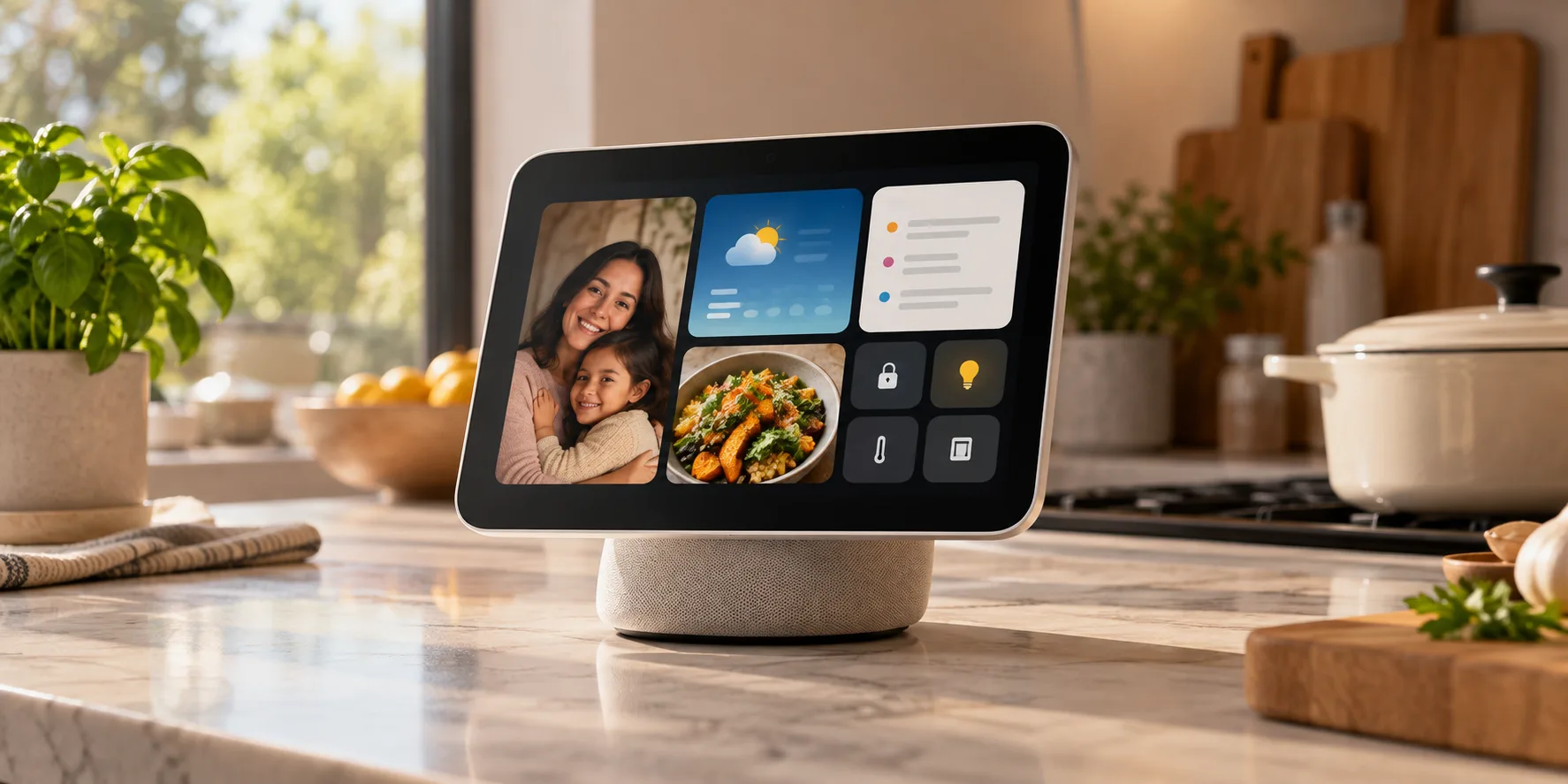
Apple HomeView is a $429 smart display for the kitchen counter, shipping 13 November, with a seven-inch screen, an A18 chip and a Siri that recognizes up to six people by face. Amazon shipped the same idea in 2017 and Google in 2018, so Apple is nearly a decade late and betting the AI closes the gap. The fine print is the problem. Setup and the personalized features need a paired iPhone or iPad, personal content only appears when that phone is on the same Wi-Fi and recently unlocked, and there is no regular App Store. The device leans on the phone it is supposed to earn a place beside. Add the wall mount and it is $508.95 before tax for a small screen showing what your phone already shows. There is real work for AI in a house, like timing the heating to cut the power bill or catching equipment before it fails, and none of it needs another screen on the counter.
Apple announced HomeView today, a smart display for the kitchen counter that sells for $429 in Canada. It has a seven-inch screen and an A18 chip, and it uses facial recognition to work out which member of the household is standing in front of it.
All that hardware goes into showing recipes, taking FaceTime calls and setting timers, along with the rest of what Apple puts in the demo. I already own a phone that does every bit of it. So does almost everyone who will look at buying one.
Amazon put a screen and a voice assistant on the kitchen counter with the Echo Show in 2017, and Google followed with the Home Hub a year later. They did roughly the same jobs. Apple is arriving nearly a decade later with a faster chip and the redesigned Siri, and counting on the AI to make up the difference.
I don’t think it does. Recognizing faces is clever, but I don’t need my kitchen to know who I am before it tells me the pasta is ready. Siri has been setting timers on my phone for years.
The detail I keep coming back to is in the fine print. HomeView needs an iPhone or iPad to set it up and to run its personalized features, and the more advanced personal-context AI only works with a paired device that supports Apple Intelligence. So the new AI screen leans on the phone in my pocket for some of the things that are supposed to justify buying it. There’s no regular App Store on it either, which means it does what Apple decided it does and nothing more.
An iPad goes on vacation with you and runs thousands of apps. HomeView stays where you put it.
If you’d rather put it on the wall, the wall-mounted version is the same $429, plus mounting hardware that starts at $79.95. That’s $508.95 before tax for a small screen showing information your phone already has.
Fair enough, there are households where this makes sense. If the whole house is wired with smart devices, a fixed control panel in the kitchen has some appeal, and some families will like a shared screen that knows who’s using it. I suspect that’s a small group, and Apple is pricing it like a mass-market product anyway.
Apple has a good record of showing up late and winning. The iPhone wasn’t the first smartphone and the Watch wasn’t the first smartwatch, but each one was clearly better than what people were using before. HomeView doesn’t look like that kind of product to me. It looks like something designed around what Apple’s hardware can do rather than a problem anyone was having at home.
There is real work for AI in the house. A system that times the heating and cooling to bring down the electricity bill, or flags equipment before it fails, would be worth paying for. None of that needs another screen on the counter.
Until someone builds that, the timer stays on my phone.
Frequently Asked Questions
What does HomeView cost in Canada?
$429 for either version, the one that sits on a counter and the one built for a wall. The wall mount itself is separate and starts at $79.95, with wired options running up to $179.95. So a wall installation lands at $508.95 before tax at the cheapest. Pre-orders opened on 13 October 2026 and it ships on 13 November.
What does it actually need an iPhone for?
More than the marketing suggests. Setup and multiuser support both require a compatible iPhone or iPad. Beyond that, your personal content, things like Messages and Calendar, only shows up on HomeView when your paired phone is on the same Wi-Fi network and has been unlocked recently. The advanced personal-context AI needs a paired device that supports Apple Intelligence. Without a phone nearby you still get a capable smart speaker with a screen, which is a different and cheaper category of product.
How is this different from an Echo Show or a Google Home Hub?
Mostly in the chip and the assistant. Amazon shipped the Echo Show in 2017 and Google the Home Hub in 2018, and the jobs are the same: recipes, timers, video calls, controlling the lights. HomeView adds an A18, a better screen, face recognition for up to six people and Apple Intelligence. It also costs considerably more and runs only what Apple ships on it.
Can I install apps on it?
Not in the way you can on an iPad. There is no regular App Store. HomeView runs Apple’s own services and a set of integrations, which means its capabilities are fixed at whatever Apple decided to include. That is the difference between a device that grows over time and one that does not.
Who should actually buy one?
Households already full of HomeKit accessories, where a fixed control panel in the kitchen saves pulling a phone out twenty times a day. Families who want a shared screen that greets each person differently. Both are real, and both are smaller groups than the price implies Apple is aiming at.
