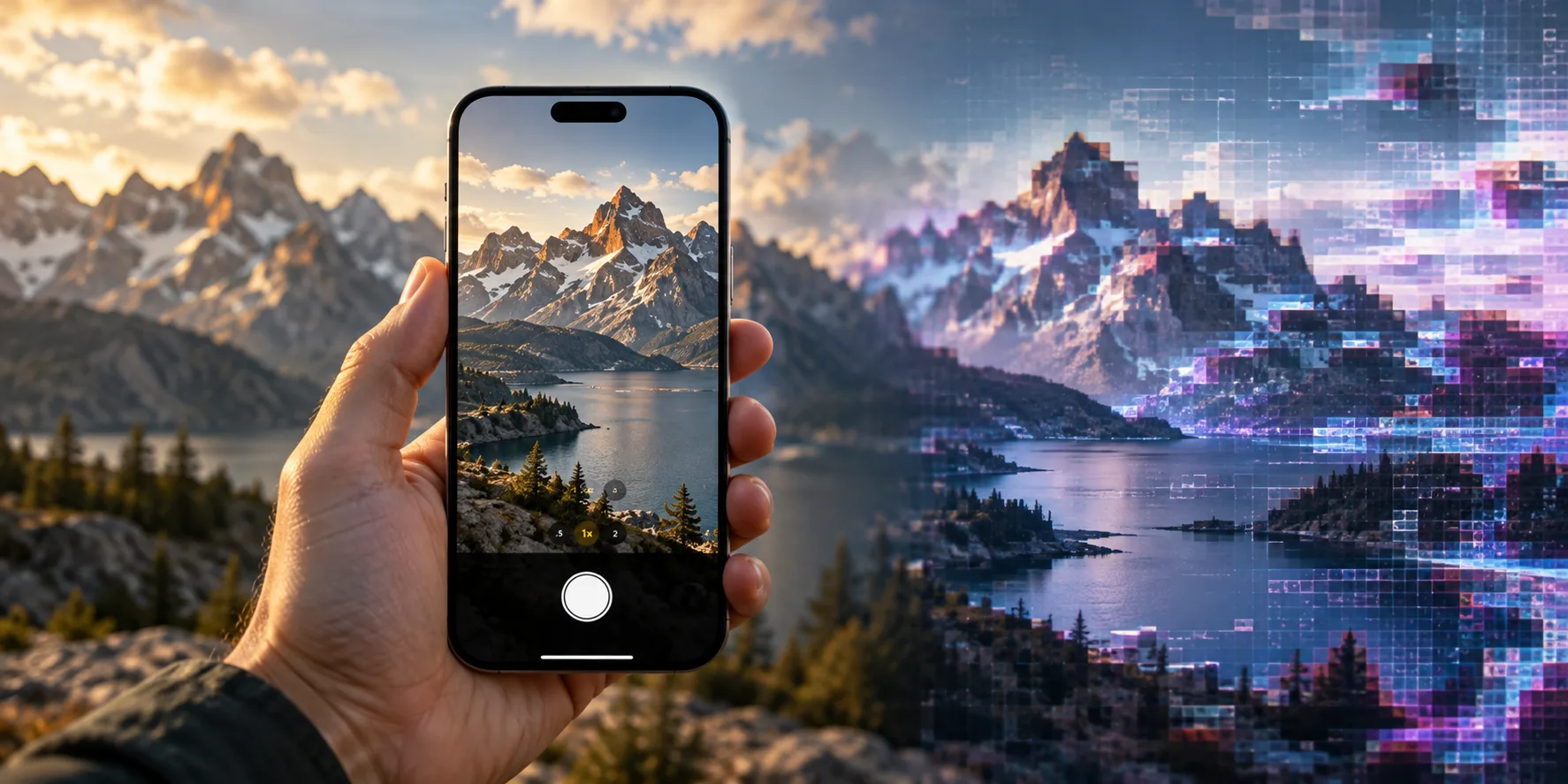
Detecting AI-generated images is an arms race the detectors keep losing. Apple Reference Image takes the opposite approach: the iPhone’s camera sensor cryptographically signs what it captures, Private Cloud Compute carries that evidence through computational photography, and the finished JPEG arrives with a chain of custody back to physical hardware. It does this without embedding a device identifier, so a journalist or protester can prove the camera was real without revealing which phone took the shot. The important caveat is that provenance is not truth. A verified photograph of an AI image on a monitor is still a verified photograph.
For most of photography’s history, a photograph carried an implicit promise. A camera was pointed at something in the real world, and this is what it saw.
Generative AI is breaking that promise.
We can now create convincing photographs of people, places and events that never existed. And as AI image generation gets better, trying to detect whether an image is fake is turning into an arms race Apple doesn’t think it can win.
So Apple is coming at the problem from the other direction.
Instead of asking “can we detect whether this image is fake,” Apple is asking “can we prove that this image actually came from a physical camera.”
That’s the idea behind Apple Reference Image.
From detecting fake to proving real
Most attempts to deal with AI imagery focus on detection. Examine an image, look for clues an AI model created it.
The problem is AI keeps getting better. Every detection method has a shelf life.
Apple’s approach skips that fight entirely. Instead of analyzing a finished photograph and guessing where it came from, Reference Image builds a chain of evidence starting with the camera itself.
When you take a Reference Image, the iPhone’s camera sensor securely signs what it captures. Other parts of the phone verify important information about the photograph, and trusted timestamps establish a window in which the image had to exist.
It’s basically a photographic chain of custody.
The camera isn’t saying “this looks like a real photograph.” It’s saying “I captured this.”
Following the photograph from camera to JPEG
Here’s the complication. What a camera sensor captures isn’t the photograph you actually see. Modern phones run enormous amounts of computational photography before spitting out the finished image.
So Apple has to maintain the chain of evidence through all of that processing too.
The original camera data becomes a secure digital negative. Apple’s Private Cloud Compute verifies the evidence attached to it and develops it into the finished photograph.
That gives you a chain: finished photograph, verified processing, original camera data, physical camera sensor.
Apple even throws AI into the mix here, using it to check whether the raw image has the characteristics you’d expect from a real camera sensor. Which is a nice twist. Instead of using AI to fake the photograph, Apple is using AI to help prove the photograph came from the physical world.
Proving a photograph without identifying the photographer
Apple also had to think through a privacy problem most people wouldn’t catch.
A cryptographically authenticated camera could easily turn into a tracking device. If every photograph carried a permanent identifier for the phone that took it, you could link together photographs taken anonymously by a journalist or a protester. That’s a real risk, not a hypothetical one.
Apple designed Reference Image so someone can verify a legitimate camera captured an image without learning which specific iPhone took it, or whether two photographs came from the same phone.
You can prove the camera was real without identifying the photographer.
Real doesn’t necessarily mean true
There’s one limitation that matters a lot here.
Reference Image can prove a physical camera captured something. It cannot prove that what happened in front of the camera was true.
You could photograph an AI-generated image displayed on a monitor. You could photograph a fake document. You could stage an event or frame a scene to mislead. None of that breaks the chain of custody, because the camera really did capture what was in front of it.
Reference Image proves provenance, not truth. That distinction is going to matter more than people realize.
Building evidence of reality
This is what makes Apple’s idea interesting beyond being another camera feature.
The AI industry has poured enormous effort into detecting synthetic content after it’s been made. I think that’s a losing battle, and I suspect Apple thinks so too.
So Apple flipped the problem. Don’t try to prove an arbitrary image wasn’t generated by AI. Give cameras a way to prove an image was captured from the physical world instead.
That could matter a lot for journalism, insurance claims, inspections, investigations, scientific documentation, citizen reporting. Anywhere someone needs to show that what they’re looking at actually happened.
Apple’s answer isn’t a better detector. It’s giving photographs something they never really needed before: a chain of evidence.
Frequently Asked Questions
What is Apple Reference Image?
It is Apple’s approach to proving a photograph came from a real camera rather than from an AI model. The iPhone’s camera sensor securely signs what it captures, other parts of the phone verify key information about the shot, and trusted timestamps establish a window in which the image had to exist. The result is a photographic chain of custody that runs from the finished file back to physical hardware.
How is this different from AI image detection?
Detection examines a finished image and looks for clues that a model made it. That only works until generation gets better, which it keeps doing, so every detection method has a shelf life. Reference Image skips the guessing entirely. It doesn’t analyze the picture to decide where it came from. It carries evidence forward from the moment of capture.
Doesn’t computational photography break the chain?
That is the hard part, because what the sensor captures is not the photograph you end up looking at. Apple turns the original camera data into a secure digital negative, and Private Cloud Compute verifies the evidence attached to it before developing it into the finished photograph. You end up with a chain of finished photograph, verified processing, original camera data, physical camera sensor.
Can a Reference Image be traced back to a specific iPhone?
No, and that was deliberate. A cryptographically authenticated camera that stamped a permanent device identifier into every photo would be a tracking device, and anyone could link together shots taken anonymously by a journalist or a protester. Apple designed it so a verifier can confirm a legitimate camera captured the image without learning which phone took it, or whether two photographs came from the same phone.
Does a verified photograph mean the photograph is truthful?
No. Reference Image proves provenance, not truth. You could point the camera at an AI-generated image on a monitor, photograph a fake document, or stage an event, and none of it breaks the chain of custody, because the camera really did capture what was in front of it. That distinction is going to matter more than people realize.
Who actually needs this?
Anyone who has to show that what they are looking at actually happened. Journalism, insurance claims, inspections, investigations, scientific documentation and citizen reporting all depend on a photograph carrying a promise that generative AI has been steadily dissolving. Reference Image gives photographs something they never really needed before: a chain of evidence.