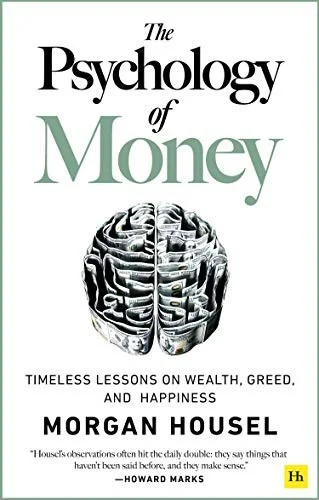
Nineteen short chapters on behaviour rather than spreadsheets. The through line is that financial decisions are made at the dinner table, not in a model, and that doing well with money depends more on temperament than intelligence.
The chapter on luck and risk is the one I would keep. Every outcome contains both, and we systematically credit skill for the first and blame circumstance for the second, depending on whose outcome we are explaining.
Room for error, enough, and the point that compounding only works if you leave it alone are the other three ideas worth the price.
It is repetitive. It is also the one personal finance book I would hand to someone who hates personal finance books.
Read December 2025.