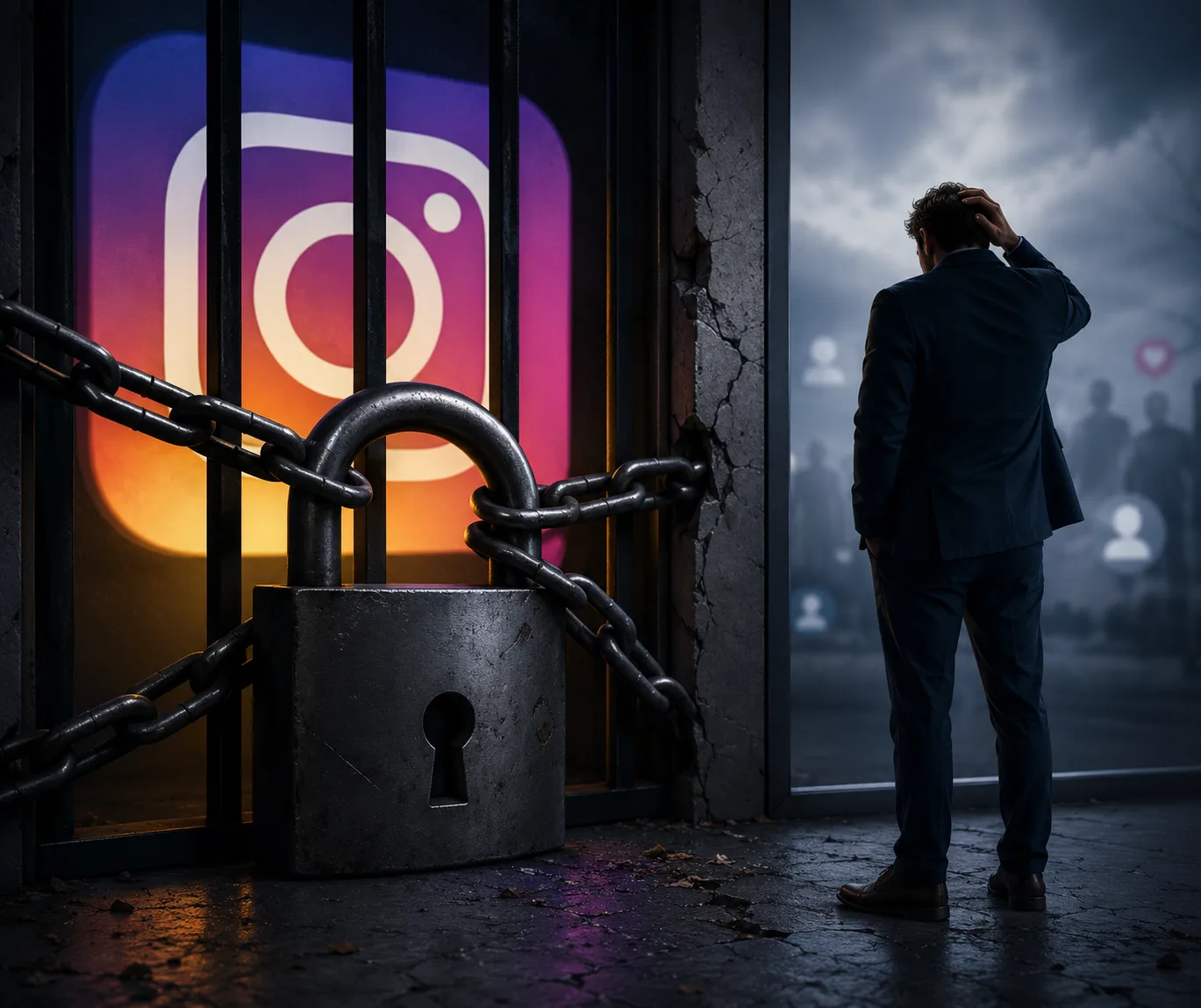
Most organizations now run mission-critical operations on social accounts they don’t actually own, and Meta’s account recovery process exposes the gap. When access disappears, so do followers, ad history, customer channels, verification, and brand equity, and Meta’s recovery tools are still built for consumers rather than businesses. The fix is governance: treat social platforms as distribution channels, keep the assets you actually own (website, email list, CRM, content archives, identity) at the centre, and assume access can vanish faster than it took to build.
Most organizations still treat social media accounts as marketing channels. For a lot of brands, though, those accounts have turned into something far more important: critical business infrastructure. That’s where the trouble starts.
Over the past few years, stories of people and businesses losing access to their Facebook and Instagram accounts have piled up, sometimes the account gets hacked, sometimes the employee who ran it leaves, sometimes an automated system disables it for reasons nobody can explain. The outcome tends to be the same. The organization gets stuck in a recovery process with almost no visibility, little support, and no obvious way out.
The problem isn’t really account security. It’s ownership.
A Story I’ve Seen Firsthand
A few years back I worked with a large national brand that got locked out of its Instagram account after the employee who managed it left.
What should have been a routine handoff became a multi-year mess.
The organization tried every path it could find. It contacted Meta support. It submitted ownership documentation. It worked through agency relationships and escalated through business channels. It provided evidence of trademark ownership and brand control.
None of it worked. Months turned into years.
Eventually they gave up. Instead of recovering the original account, they spun up a new one and rebuilt their audience from zero.
The original account is still there. It sits on Instagram’s servers as a ghost of the brand’s history, a duplicate the legitimate organization can’t access, control, or take down.
Sit with that for a second. Imagine losing the keys to a retail store and being told the building stays open forever, but nobody can go inside. That sounds ridiculous. It happens in digital spaces all the time.
The Problem Meta Created
Account recovery is hard, and it should be. It’s one of the highest-risk security functions on the internet. Make recovery too easy and attackers walk in. Make it too hard and legitimate users get locked out for good.
So I understand Meta’s challenge. What I don’t accept is the operational failure underneath it.
For years Meta has pushed organizations to build communities, audiences, customer relationships, and ad strategies on its platforms. Businesses have poured billions into creating value for Facebook and Instagram. Then a dispute comes up, and those same businesses find out the support they get is nowhere near the value of what’s at stake.
Meta wants companies to treat these accounts as mission-critical, while handing them recovery tools that look like consumer self-service. That gap is the risk.
The Hidden Risk of Platform Dependency
This goes well beyond Meta. A lot of organizations have let critical assets become dependent on platforms they don’t control, often without noticing it happen.
Look at what disappears when a social account is lost:
- Followers vanish.
- Advertising history is gone.
- Customer communication channels go dark.
- Verification status is stripped.
- Historical content becomes inaccessible.
- Brand confusion sets in as duplicate accounts linger.
For some businesses, the social account is effectively the customer database. The difference is that with a CRM you actually own and administer your data. Here, you don’t. The platform owns the infrastructure, runs the recovery process, and decides who gets in.
This Isn’t Just a Meta Problem
Google accounts, Microsoft identities, Apple IDs, LinkedIn profiles, and plenty of others carry the same risk. What sets Meta apart is how much value sits behind a single login.
One Facebook profile can control:
- Instagram accounts
- Facebook Pages
- Meta Business Manager
- Advertising accounts
- Messenger communication
- Marketplace listings
- Community Groups
When one account fails, the damage spreads fast and wide.
The Rise of “Shadow Recovery Services”
This support gap has spawned an entire side economy. Search around and you’ll find no shortage of consultants, agencies, and recovery specialists who claim they can get your lost Meta account back.
Some of them are legitimate experts who genuinely understand Meta’s tangled support system, some lean on partner relationships and escalation channels regular users never see, and some work in far murkier territory, relying on insider contacts, contractors, or practices you’d rather not ask about.
When a market grows up around getting past official support, it tells you something. The official process is failing enough people that an alternative becomes worth paying for.
The Real Lesson: Own Your Audience
The lesson here isn’t about Instagram. It’s about resilience.
Treat social platforms as distribution channels, not as primary assets. The things that actually matter should be owned outright:
- Your website
- Your email list
- Your CRM
- Your customer database
- Your content archives
- Your identity systems
Social platforms are still enormously useful. For discovery, engagement, and reach, nothing else comes close, but they should never become the only place your customer relationships or brand equity live.
A social media account isn’t property. It’s access granted by a third party, and as plenty of organizations have learned the hard way, access can vanish a lot faster than it took to build.
The Governance Question Every Executive Should Ask
If your main social media administrator walked out tomorrow, could your organization recover every account within 24 hours?
If you’re not sure, you don’t have a social media problem. You have a governance problem.
The companies that do well over the next decade won’t be the ones with the biggest followings. They’ll be the ones that understood the difference between renting an audience and owning a relationship.
Frequently Asked Questions
Why is losing an Instagram or Facebook account such a big deal for businesses?
For many organizations the social account has become critical infrastructure. It holds followers, ad history, verification status, historical content, and an active customer communication channel. When access disappears, that entire stack goes with it, and the platform alone decides whether and when it comes back.
Why is Meta account recovery so difficult for businesses?
Meta’s recovery tooling is fundamentally consumer self-service, designed for individual users who forgot a password, not for organizations defending mission-critical brand assets. The result is a process with little visibility, limited human support, slow response times, and ownership-documentation paths that often fail even with strong evidence (trademarks, brand control, agency relationships).
What actually disappears when a business loses a social media account?
Followers vanish. Advertising history is gone, customer communication channels go dark, verification is stripped. Historical content becomes inaccessible, and duplicate accounts often linger, creating brand confusion the legitimate organization can’t fix.
Is this only a Meta problem?
No. Google accounts, Microsoft identities, Apple IDs, and LinkedIn profiles all carry the same dependency risk. What makes Meta especially exposed is how much sits behind a single Facebook profile. Instagram, Pages, Business Manager, ad accounts, Messenger, Marketplace, and Groups can all share the same fate when one login fails.
What are “shadow recovery services” and should businesses use them?
They’re the side economy of consultants, agencies, and specialists offering Meta account recovery outside the official support path, some are legitimate experts with deep partner-channel knowledge, some lean on escalation paths regular users don’t see, some operate in murkier territory using insider contacts or contractor relationships. The fact that the market exists at all is a strong signal that the official process is failing enough organizations to make alternatives worth paying for, but engaging an outside recovery service carries its own due-diligence work.
What assets should organizations actually own outright?
Your website, your email list, your CRM, your customer database, your content archives, and your identity systems, social platforms are still extremely useful for discovery, engagement, and reach, but they should be treated as distribution channels, not as primary assets. The customer relationship and brand equity should always live somewhere you control.
What is the one governance question every executive should ask?
“If our main social media administrator walked out tomorrow, could we recover every account within 24 hours?” If the answer isn’t a confident yes, the problem isn’t social media. It’s governance. Documented ownership trails, multiple admin roles, business-verification status, and offline copies of audience and content data should all exist before they’re needed.